Elementor #4255
West Papuan Civil Society Coalition Demands Unconditional UN and Pacific Access Following Regional Diplomatic Push A broad coalition of West Papuan civil society organisations, Indigenous

West Papuan Civil Society Coalition Demands Unconditional UN and Pacific Access Following Regional Diplomatic Push A broad coalition of West Papuan civil society organisations, Indigenous
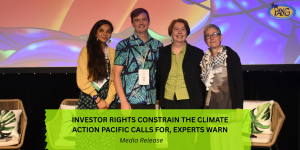
Investor Rights Constrain the Climate Action Pacific Calls for, Experts Warn For Pacific countries on the frontlines of climate change, the action needed to protect
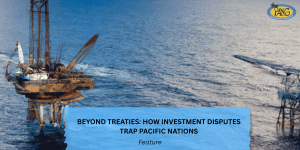
Beyond Treaties: How Investment Disputes Trap Pacific Nations by Tania Uale Across the vast expanse of the Blue Pacific, island states are managing approximately 30%
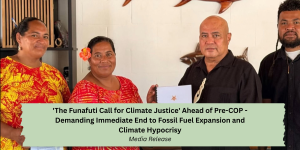
‘The Funafuti Call for Climate Justice’ Ahead of Pre-COP – Demanding Immediate End to Fossil Fuel Expansion and Climate Hypocrisy The Pacific Regional Non-Governmental Organisations
The region operates within a history of colonisation and has long been characterised as a group of “underdeveloped” small island states “faced with economic challenges”.
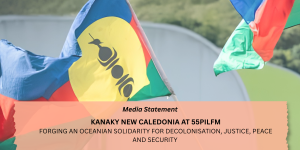
Media Statement KANAKY NEW CALEDONIA AT 55PILFM: FORGING AN OCEANIAN SOLIDARITY FOR DECOLONISATION, JUSTICE, PEACE AND SECURITY As the 55th Pacific Islands Forum Leaders Meeting
PANG’s call comes as new regional security frameworks, including the proposed Blue Pacific Ocean of Peace Regional Security Treaty (BPOPRST) and Regional Operations Deployment Framework (RODF), move through regional processes.
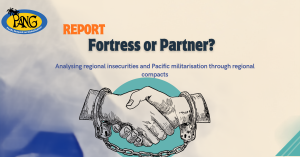
Fortress or Partner? Analysing Regional Insecurities and Pacific Militarisation Through Regional Compacts Is the Pacific becoming a “fortress” instead of a true partner? Right now,
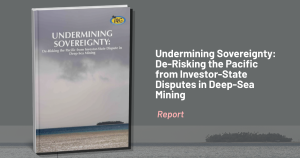
Undermining Sovereignty: De-Risking the Pacific from Investor-State Disputes in Deep-Sea Mining, a new report by the Pacific Network on Globalisation (PANG) and authored by Professor Emeritus Dr Jane Kelsey, examines another growing concern: the exposure of Pacific governments to Investor-State Dispute Settlement (ISDS).
Undermining Sovereignty: De-Risking the Pacific from Investor-State Disputes in Deep-Sea Mining, authored by Professor Emeritus Dr Jane Kelsey, unpacks the risks of Investor-State Dispute Settlement (ISDS) and how extractive corporations increasingly use it to sue governments for hundreds of millions of dollars over government actions.
State of the Pacific Ocean 2026 Report The inaugural State of the Pacific Ocean Convening (SOTPOC) brought together Pacific leaders, parliamentarians, academics, Indigenous knowledge holders,
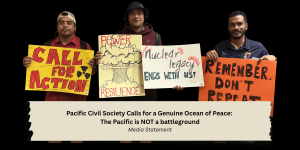
Pacific Civil Society Calls for a Genuine Ocean of Peace: The Pacific is NOT a battleground Media Statement13 July 2026 The Pacific Ocean is far