
by Viliame Senivau and Tania Uale

West Papua’s colonial history is among the most tragic in the Pacific, marked by gross violations of autonomy and personhood, driven by competing geopolitical interests and agendas. The remnants of this history have culminated in the oppression, displacement and deaths of Indigenous Papuans today.
The Sixth Pacific Human Rights Film Festival, which brought human rights films and discussions to Pacific audiences, featured The Promise, a film by Dutch Director, Daan Veldhuizen, in its first-ever screening dedicated to decolonisation. The film contrasts archival footage from the period of Dutch colonial rule with the current realities of West Papuans, highlighting the gap between historical promises and their lived experiences. The film underscores the Dutch Government’s failure to acknowledge its role in West Papua’s history, while giving voice to the feelings of betrayal and powerlessness expressed by Papuans featured in the documentary.
For the Pacific, West Papua’s legacy is not an isolated injustice. It reflects broader regional struggles over self-determination, control of natural resources and the enduring influence of external powers.
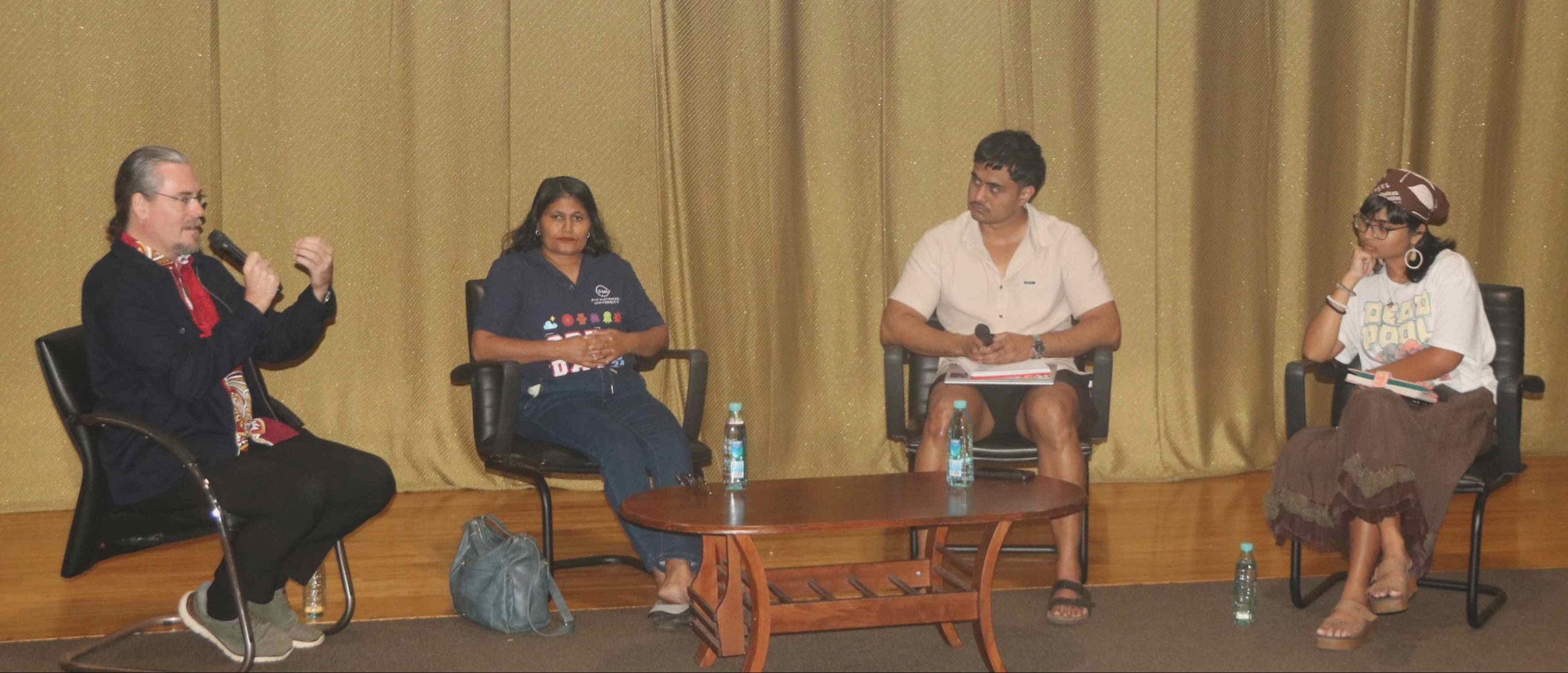
Speaking at the post-screening panel, Hagino Erasito, Assistant Campaigner at the Pacific Network on Globalisation (PANG), connected West Papua’s experience to the wider Pacific struggle against colonial exploitation.
“The two films screened reminded us that colonisation has taken different forms across the Pacific, but its impacts continue to affect our people in many ways. The West Papuan film reaffirms the sentiments of our Kanak and West Papuan elders: for us Pacific peoples, being blessed with natural resources is a curse. The West might experience this differently, but for us Pacific peoples, there is almost no escaping it when we possess the resources that fuel colonial greed,” he stated.
To understand the Dutch political decisions of the time, one must look at the cynical mathematics of the Cold War. By the late 1950s, the Netherlands had begun preparing the territory for greater self-government through a process known as “Papuanisation,” which included training Papuan civil servants, expanding their participation in the administration and preparing its colony for full sovereignty.
At the same time, Indonesia, itself a former Dutch colony, claimed the territory as its own under the leadership of the nationalist President Sukarno. In December 1961, Sukarno launched Operation Trikora, a military mobilisation designed to annex West New Guinea under Indonesian control, including through military force. Increasingly aligned with the Eastern Bloc, Sukarno rejected the Dutch framing that West New Guinea should have a separate political future, instead calling continued Dutch rule an unhealed wound of incomplete decolonisation, describing the territory as a weapon aimed at Indonesia.
As armed hostilities escalated, Washington became less concerned with the self-determination of the Papuan people and more so with keeping Jakarta out of the orbit of the Soviet Union. Prioritising Cold War strategic interests, the US State Department and National Security Council advanced intense diplomatic efforts for the Netherlands to relinquish control of West Papua.
This resulted in what can only be described as a diplomatic sacrifice. Under intense American pressure, the Dutch relented. The resulting 1962 New York Agreement established the United Nations Temporary Executive Authority (UNTEA)—the first time in history the UN took direct control of a territory. But this was merely a bureaucratic waiting room. After just seven months, the UN handed the keys of the territory over to the Indonesian military on 1 May 1963.
The agreement stipulated that Indonesia must conduct an official act of self-determination “according to international practice.” What followed in 1969 was a process long condemned as a farce: the so-called “Act of Free Choice,” known in Indonesian as Pepera.
Out of a population of over 800,000 West Papuans, the Indonesian authorities hand-picked just 1,022 tribal elders to participate in the 1969 Act of Free Choice. Isolated from the outside world, threatened with violence, and operating under military duress, these delegates were recorded as unanimously endorsing integration with Indonesia.
Declassified Western communications from the time show that US and British officials knew the vote was a rigged, foregone conclusion and yet, the UN General Assembly quietly noted the result under Resolution 2504, sealing West Papua’s fate with this blanket of illegitimacy.
A recurring theme throughout The Promise was the significance of documentation and archival practices so that “what really happened” is remembered and learned from. We live in an era where history is easily rewritten by the powerful; the act of restoring and, more importantly, critiquing an archive is an act of radical political intervention.
Film offers a powerful means of bringing these histories and contemporary struggles to wider audiences. Earlier this year, the documentary Pig Feast (Pesta Babi) shook the region and brought the realities of the humanitarian and ecological crises in West Papua to a broader audience. Similarly, The Promise has helped mobilise movements within the Netherlands and across Europe.
Benjamin Wheeler, Director of the Pacific Human Rights Film Festival, noted that decolonisation was a recurring theme across many of the films screened at the festival.
“The histories are often written by the colonial powers, so the decolonisation project is difficult for that reason. If you can tell an effective story, you can really hook people’s minds,” he added.
Wheeler spoke of the need for more capacity-building and education within the arts, and with film in particular.
Throughout the Pacific, decolonisation and self-determination remain a prevalent part of political activist movements, and by documenting colonial histories and amplifying the voices of those affected, Pacific filmmakers and storytellers can contribute to wider efforts to advance decolonisation and strengthen movements for self-determination across the region.
Erasito, at the post-screening panel discussion, further argued that the legacies of colonisation extend beyond formal colonial rule.
He challenged the inaction by many Pacific Leaders, and attributed this to Pacific nations’ reliance on foreign aid, external investment, and relationships with colonial powers.
“Over time, these relationships create competing pressures that force our leaders to balance economic needs with Pacific solidarity and sovereignty. This creates a form of neocolonialism that reintroduces Western dictatorship,” he added.
Amidst West Papua’s worsening human rights landscape, mass displacement, and an increased Indonesian military presence and capability, the Pacific region is rightfully pressured to act. The recent Pacific Islands Forum Leaders’ Meeting in Palau marked an important diplomatic intervention, with leaders proposing a high-level special envoy co-led by Fiji’s Prime Minister Sitiveni Rabuka and Papua New Guinea’s James Marape. Yet, in the Netherlands, the response to West Papua’s history remains firmly locked in the realm of cultural remorse rather than geopolitical action.
The existence of The Promise displays a stark dichotomy: while it publicly supports a UN human rights assessment visit to West Papua, it continues to license millions of euros in maritime and military systems to the Indonesian armed forces. This political paradox is simply appalling.
When the Netherlands signed the 1962 New York Agreement, it did so under the explicit legal caveat that a fair, UN-supervised referendum on self-determination must take place. When that referendum was corrupted into the 1969 “Act of No Choice,” the Netherlands, bowing to Western Cold War dynamics, abandoned its enforcement responsibilities. By threatening to strip Indonesia’s status, Pacific leaders are essentially stepping into the enforcement vacuum left by the Dutch government sixty years ago, attempting to legally mandate the transparency the Netherlands originally guaranteed but failed to defend.
By centring West Papua within the Pacific security architecture, explicitly invoking the Boe Declaration and the 2050 Strategy for the Blue Pacific Continent, regional leaders are shifting the geopolitical gravity of the issue away from an indifferent Europe and squarely onto the shoulders of Oceania.
For more information, contact: Jennis Naidu | Media & Communications Manager | Pacific Network on Globalisation (PANG) | Email: communications@pang.org.fj